
At 11:47 PM on New Year’s Eve, Sofia’s phone buzzed with an escape alert. Her hands were shaking as she opened the Kippy app, watching the blinking dot that represented Max moving rapidly away from their Berlin apartment. Forty-one minutes later, she had him back home safe, stressed but unharmed. Without GPS tracking, Sofia would have faced hours of searching dark streets during the city’s busiest night, with no idea which direction Max had run.
This is the difference GPS tracking makes: not days or weeks of anguish, posters, and desperate social media posts, but minutes to an hour of focused, directed recovery. The stories you’re about to read are real accounts from Kippy users across Europe—five dogs, five different escape scenarios, all found in under an hour thanks to real-time GPS tracking.
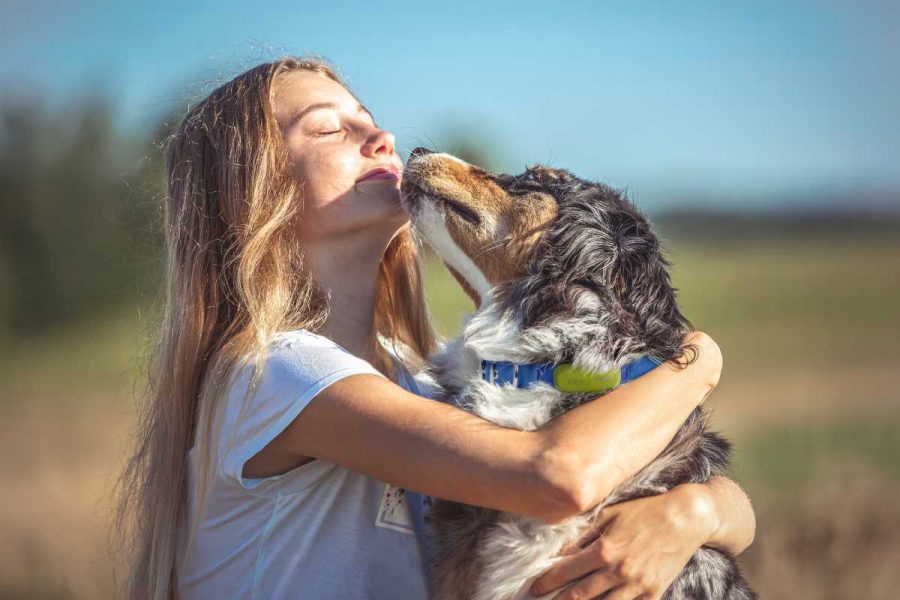
Story 1: The Fireworks Panic – Max the Golden Retriever (Berlin, Germany)
Sofia Martinez never expected Max to break through their garden fence. He’d lived in their Berlin apartment for six years without incident, a calm and gentle presence even in the chaos of city life. But New Year’s Eve 2024 changed everything.
The evening started normally enough. Sofia and her partner were hosting a small gathering, and Max was settled in his usual spot by the sofa. Then, at 11:45 PM, the neighbourhood erupted. Fireworks weren’t just overhead—they seemed to come from every direction, echoing off buildings and creating a cacophony that sent Max into immediate panic.
In his terror, Max bolted for the garden. The wooden fence panel, weakened by winter weather, gave way under his 32 kilograms of panicked Golden Retriever. By the time Sofia realized what had happened and reached the garden, Max was gone—vanished into a city of 3.7 million people on its most chaotic night of the year.
But Sofia’s phone had already alerted her that Max crossed the boundary of their property. The geofence alert showed he’d left their garden, and when she opened the Kippy app, she could see him moving in real-time through the streets of Prenzlauer Berg.
Without GPS tracking, Sofia would have faced an impossible situation. Which direction had he run? How far could he have gone in the chaos? With fireworks still exploding overhead and hundreds of people in the streets, would anyone even notice a frightened dog running past? The search radius for a panicked dog in an urban environment could be five kilometres or more, and in the darkness and celebration, Max could have been anywhere.
Instead, Sofia watched Max’s location update every few seconds on her phone. He was moving fast—terrified dogs can cover surprising distances—but she could see exactly where he was heading. She grabbed Max’s favourite blanket and a bag of treats, and she and her partner got in their car to follow the tracking signal.
Max had run nearly three kilometres through the Friedrichshain district, finally taking shelter under a parked car near Boxhagener Platz. The live tracking brought Sofia directly to his location. She could see him on her phone before she could see him in person, which allowed her to approach calmly rather than frantically searching and calling his name, which might have scared him further.
“The moment I saw him curled up under that car, I just wanted to cry with relief,” Sofia recalls. “But knowing exactly where he was, watching him on my phone the whole time—that’s what made the difference. Without the GPS tracker, I would have been running through the streets screaming his name, with no idea if I was even going in the right direction. It was 11:47 PM when I got the alert. By 12:28 AM, Max was back in the car with us, wrapped in his blanket. Forty-one minutes from escape to recovery.“
GPS features that made the difference: Geofence escape alerts, real-time location updates every few seconds, urban navigation accuracy, night-time tracking reliability.
Story 2: The Open Gate – Bella the Beagle (Tuscany, Italy)
Luca Rossini was having coffee on his terrace when the gardener arrived to trim the cypress trees surrounding his property in the Tuscan countryside. It was a routine appointment—the same gardener who’d been maintaining their land for three years. What wasn’t routine was the gate being left open for the garden equipment trailer.
Bella, Luca’s three-year-old Beagle, saw opportunity. Beagles are scent hounds, bred for centuries to follow trails relentlessly, and something beyond that gate smelled far more interesting than the comfortable home she already had. Within minutes of the gate being left open, Bella was gone—following her nose across neighbouring properties and into the rolling hills of wine country.
The concerning part? Luca didn’t even notice she was missing. He was working in his home office, assuming Bella was napping in her usual sunny spot in the garden. It wasn’t until his phone alerted him—a geofence notification from Kippy—that he realized Bella had left the property.
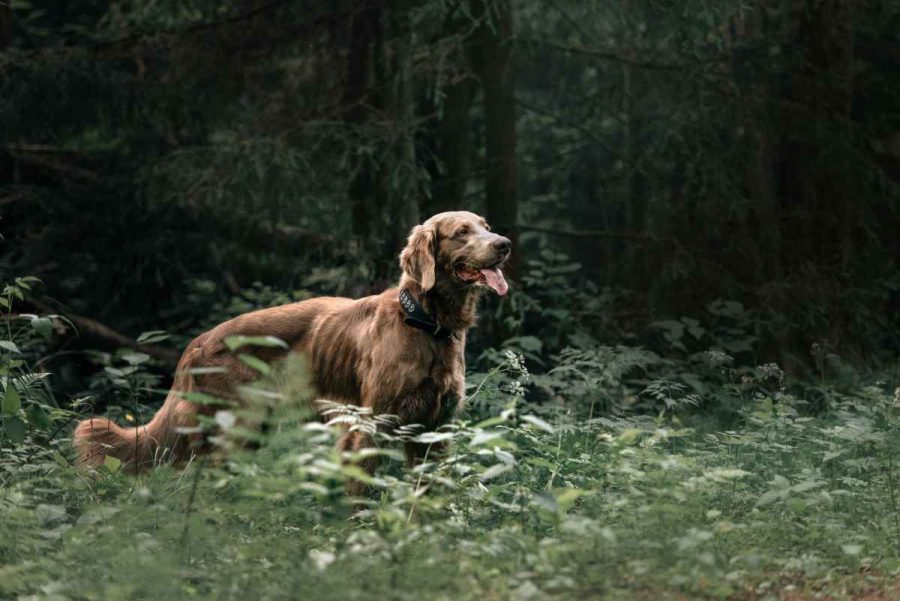
This is where GPS tracking becomes absolutely critical for Beagles and other scent hounds. Once they’re on a scent trail, recall training becomes meaningless. Their entire world narrows to that smell, and they’ll follow it for kilometres without ever looking back. Searching for a Beagle in rural Tuscany without knowing which direction she’d gone would have been like finding a needle in a haystack. The search area would have encompassed vineyards, olive groves, neighbouring farms, and endless rolling hills.
But Luca’s phone showed him exactly where Bella had gone. The historical tracking feature revealed her path: straight through the neighbour’s vineyard, across a footpath, and onto an adjoining property where she was currently investigating something near a rabbit warren.
Luca grabbed his car keys and followed the GPS coordinates. When he arrived at the location, he found Bella exactly where the tracker indicated—completely absorbed in digging at a rabbit hole, covered in dirt, utterly content with her adventure. She barely looked up when Luca arrived, so focused was she on the scent she’d been following.
“I didn’t even know she was gone,” Luca says. “The geofence alert was the first indication I had that something was wrong. By the time I checked my phone, she was already 600 metres from home and moving fast. Without that tracker, I might not have noticed she was missing for an hour or more. By then, she could have been five kilometres away, and I wouldn’t have had any idea which direction to search. Instead, I got the alert, tracked her in real-time, and had her back home within eighteen minutes. She wasn’t even slightly sorry—she was having the time of her life.”
GPS features that made the difference: Geofencing with boundary alerts, location history showing exact path travelled, accuracy in rural areas, tracking a dog absorbed in following scent trails.
Story 3: The Mountain Runner – Luna the Husky (Swiss Alps, Switzerland)
Emma Koller knew the risks of hiking with a Husky. Even with Luna’s excellent recall training, Huskies are bred to run, and their prey drive can override years of training in a single moment. That’s exactly what happened during what should have been a routine morning hike near Interlaken.
They were walking a familiar trail in the Bernese Oberland when a chamois (a type of mountain goat) appeared on the rocky slope above them. Luna’s entire body went rigid for a split second—and then she was gone. Emma had never seen her dog move so fast. Within seconds, Luna had disappeared around a bend on the trail, running at full speed into the vast alpine terrain.
This is every mountain hiker’s nightmare scenario. Huskies can maintain speeds of 20-30 kilometres per hour for extended periods, and they were literally bred to cover 100+ kilometres in a single day. In alpine terrain with multiple trails, valleys, and vast wilderness, a Husky can be several kilometres away within minutes. Traditional search methods would require mountain rescue, multiple search parties, and would likely take hours if not days.
But Emma’s Kippy tracker was already sending her live updates. She could see Luna moving rapidly across the mountainside, following the chamois deeper into the alpine terrain. The tracker’s update interval showed Luna’s position changing, allowing Emma to follow her progress in real-time.
Emma immediately called her hiking partner and they began pursuit, tracking Luna’s movements on the app. The live map showed Luna heading into a narrow valley system about two kilometres from their starting point. Rather than trying to chase directly—which would have been impossible given Luna’s speed—Emma used the terrain map to anticipate where Luna might slow down or stop.
Fifty-four minutes after the initial chase began, Emma found Luna near a mountain stream, finally stopped and drinking water. The GPS had led Emma directly to her location through terrain that would have been impossible to search effectively without real-time tracking. Luna was 6.8 kilometres from where she’d originally bolted, deep in a valley that Emma had never hiked before.
“There is absolutely no way we would have found her without real-time GPS tracking,” Emma states emphatically. “The Swiss Alps are vast. She could have run in any direction, into countless valleys and trails. We might have searched for days. Instead, I watched her entire journey on my phone. I could see when she slowed down, when she stopped, and I could navigate directly to her location. Even in that remote mountain terrain, the tracker worked perfectly. Fifty-four minutes from the moment she ran to the moment I had her back on her leash. In the Alps, that’s miraculous.“
GPS features that made the difference: Update intervals during movement, long battery life for extended outdoor activities, terrain mapping in remote areas, accuracy at high altitude and challenging geography.
Story 4: The Night Escape – Duke the German Shepherd (Amsterdam, Netherlands)
Martijn van der Berg woke at 3:17 AM to his phone vibrating on the nightstand. Half asleep, he grabbed it and saw the alert: Duke had left the property. But Duke was supposed to be sleeping in his usual spot near the dog door that gave him access to their garden. How could he have left the property?
Martijn stumbled downstairs and checked the garden through the kitchen window. The gate was standing open. Duke, his four-year-old German Shepherd, had learned to work the latch from the inside. The dog door gave Duke 24/7 access to their secure garden—or so Martijn had thought. How long had Duke been practising this? How many times had he watched Martijn operate that gate latch before figuring it out himself? German Shepherds are frighteningly intelligent, and Duke had clearly been planning this escape for some time, going from the house through his dog door into the garden, then working the gate latch to access the street beyond.
The clock showed 3:18 AM. Duke had at least a five-minute head start, possibly more. In Amsterdam’s canal-ringed streets, with hundreds of possible routes, bridges, and parklands, a nighttime search would have been nearly impossible. Duke could be anywhere within a several-kilometre radius, and in the darkness, spotting a dark-coloured German Shepherd would be extremely difficult.
But Martijn’s Kippy tracker was already telling him exactly where Duke was. The live tracking showed Duke moving purposefully through the Jordaan district, heading toward Vondelpark. German Shepherds on a mission move with determination, and Duke was clearly enjoying his unauthorized nighttime patrol of the neighbourhood.
Martijn threw on clothes, grabbed his bike, and used the live tracking to follow Duke’s route. The tracker showed every turn Duke made, every bridge he crossed. This wasn’t random wandering—Duke was on a specific route, possibly checking a territory he’d been planning to patrol.
At 3:58 AM, Martijn found Duke in Vondelpark, investigating something near the pond. Duke looked completely satisfied with himself, as if this midnight excursion was exactly what a German Shepherd ought to be doing. He came willingly when Martijn arrived, clearly having completed his self-appointed rounds.
“He had a six-minute head start in the middle of the night in Amsterdam,” Martijn explains. “The canal system means there are so many possible routes. Without GPS, I would have had to wait until morning to even begin searching properly. By sunrise, Duke could have been anywhere—or worse, someone might have called the police about a ‘dangerous’ loose German Shepherd, which creates all sorts of problems. Instead, I tracked him in real-time, followed his exact route, and intercepted him before he got into any trouble. Under an hour from alert to recovery. And yes, I’ve now installed a Duke-proof latch on that gate!“
GPS features that made the difference: 24/7 real-time tracking, escape alerts to phone while owner sleeping, urban navigation through complex street systems, EU coverage.
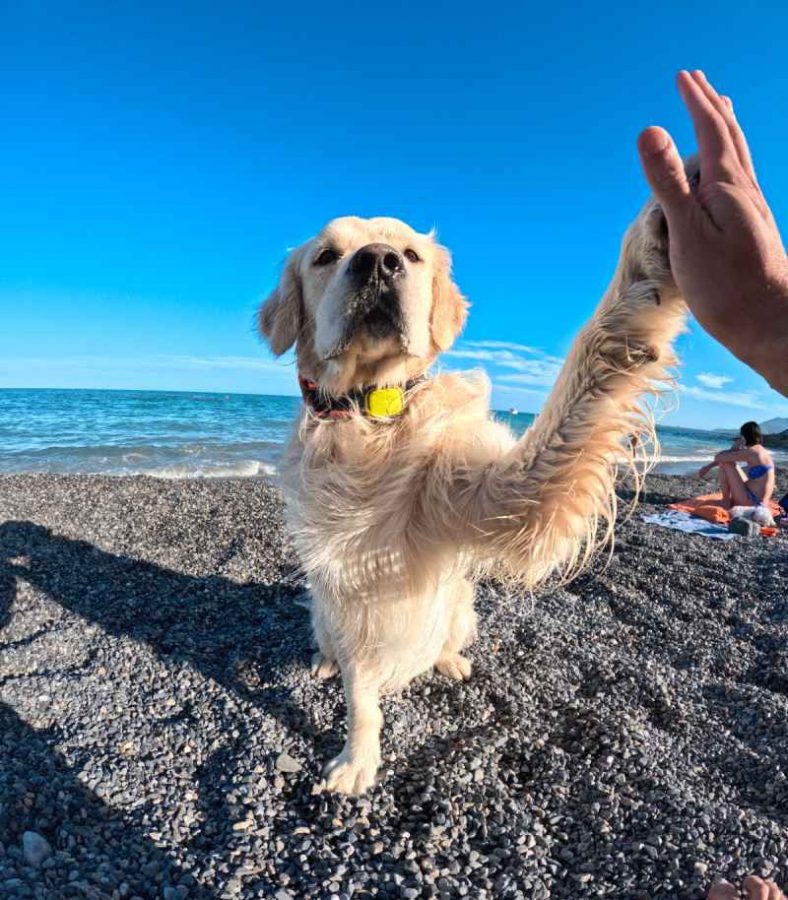
Story 5: The Beach Chaos – Milo the Jack Russell (Costa del Sol, Spain)
The García family’s holiday to the Costa del Sol was meant to be relaxing. They’d rented a villa near Marbella specifically because it had a secure garden where Milo, their energetic Jack Russell Terrier, could play safely while they enjoyed the Spanish sunshine.
What they hadn’t anticipated was a minor traffic accident occurring directly in front of their villa during their second afternoon there. The noise—screeching brakes, a small collision, people shouting—was enough to startle everyone. In the chaos that followed, with their teenage son running outside to see if anyone was hurt and neighbours emerging from their homes, the front door was left open for less than thirty seconds.
That was all the time Milo needed. The little terrier, already nervous from the loud noises, saw his opportunity and darted through the open door into the unfamiliar Spanish street.
María García felt her heart drop when she realized Milo was gone. They were in a foreign country, in an unfamiliar town, and their small dog had just disappeared into a maze of white-walled streets during peak afternoon confusion. Milo spoke no Spanish, wore no tags indicating he was a tourist’s dog, and could be literally anywhere within the sprawling coastal development.
This is where the panic would normally set in—unfamiliar territory, language barriers, not knowing local procedures or where to search. But María’s phone alerted her when Milo crossed their rental property’s boundary. She opened the Kippy app and saw him moving rapidly through the neighbourhood streets, heading toward the beach area.
María and her daughter immediately set out to follow the GPS tracking, while her husband stayed with their other children and dealt with the accident situation. The live tracking showed Milo’s erratic path through the streets—frightened and confused, he was moving quickly but without direction, making turns seemingly at random.
Twenty-eight minutes after his escape, they found him sheltered near a beach restaurant’s outdoor furniture, scared and shaking but unharmed. The GPS had brought them directly to his location along the Paseo Marítimo, even though the area was crowded with tourists and holiday-makers.
“We’re from Barcelona, but Marbella was completely unfamiliar to us,” María says. “We didn’t know the street names, the neighbourhoods, or where anything was. Milo could have been anywhere, and trying to explain to people in our limited Spanish that we’d lost our dog seemed overwhelming. But the GPS didn’t care that we were tourists in an unfamiliar place. It just showed us where Milo was. We followed the tracking, found him quickly, and had him back in our arms. Less than 30 minutes. On holiday, in a foreign place, during chaos—and we still found him in under half an hour.“
GPS features that made the difference: Live location in tourist-heavy unfamiliar areas, tracking a small, scared dog in crowds, EU-wide coverage for travelling families.
The common thread of using a GPS tracker: Minutes instead of days
When you read these five quite challenging recovery stories, certain patterns emerge that explain why GPS tracking is so effective. The average recovery time across these cases was just 38 minutes—from the moment each owner received the escape alert to the moment they had their dog back safely.
Without GPS tracking, these stories would have looked completely different. Research shows that the median time to recover a lost dog without real-time tracking is approximately two days. Many dogs remain missing for a week or longer, with some are never found at all. According to studies, while 93% of lost dogs are eventually found, most of that recovery happens within the first 24-48 hours through intensive neighbourhood searches, poster campaigns, social media appeals, and shelter visits.
The stress differential is enormous. Instead of days of anguish, sleepless nights wondering if their dog is safe, and the exhausting process of organizing search parties and distributing flyers, these owners experienced minutes of focused concern followed by relief. The emotional toll of losing a pet is significant – studies show that the stress levels of people searching for lost pets are comparable to major life crises. GPS tracking doesn’t eliminate the worry, but it dramatically reduces the duration of that acute stress.
The cost savings are substantial as well. None of these owners had to print posters, take time off work for extensive searches, pay for social media advertising, or hire pet detectives. The typical cost of searching for a lost dog ranges from €500 to €3,000 or more, not counting the value of time spent searching. A GPS tracker subscription costs approximately €7-12 per month – and covers you for an entire year for less than the cost of a single day with a professional pet detective.
Safety considerations are equally important. The longer a dog remains lost, the higher the risk of injury from traffic, encounters with wildlife, exposure to weather, falling into private swimming pools or theft. Every additional hour increases these dangers exponentially. By reducing recovery time from days to minutes, GPS tracking dramatically reduces the risk of harm befalling your dog during their escape.
According to recent European pet tracking data, over 80% of pets equipped with GPS trackers are successfully recovered, with the vast majority found within just a few hours of going missing. This compares to overall recovery rates of 71-93% for dogs generally, with recovery times measured in days or weeks rather than minutes or hours.
For families travelling across EU borders, the difference is even more pronounced. Traditional search methods become exponentially harder in unfamiliar locations where you don’t know the area, may not speak the language fluently, and don’t have established local contacts. GPS tracking works the same whether you’re in your home neighbourhood or on holiday in another country—the tracker provides the location regardless of local familiarity.
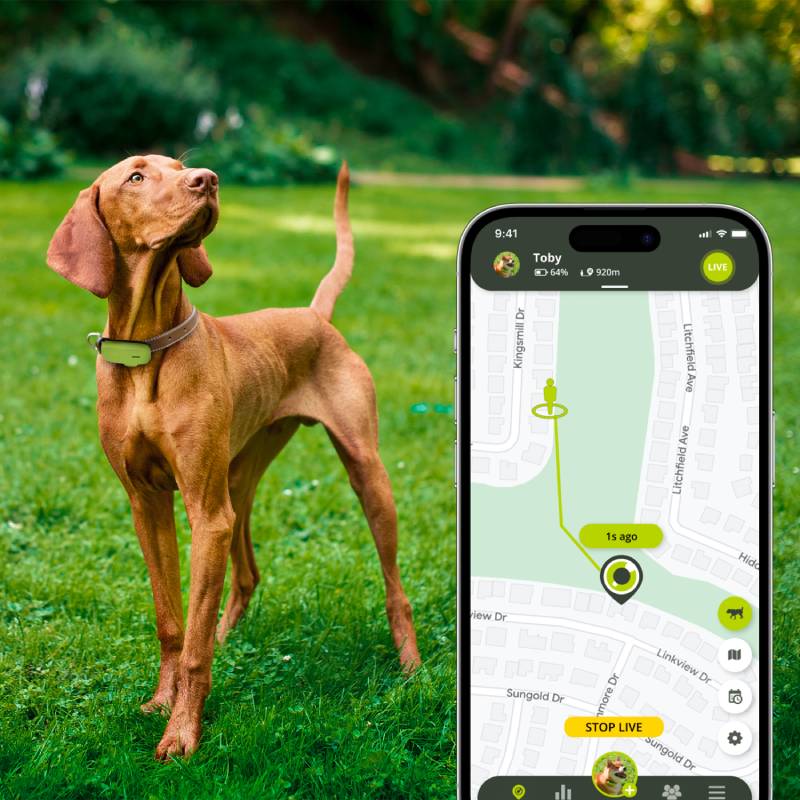
Why every second counts
The statistics on distance travelled over time are sobering. A frightened dog can cover 1 to 5 kilometres in the first hour after escaping, depending on their breed, fitness level, and what triggered their flight. A Husky at full speed can be ten kilometres away within an hour. A Beagle following a scent trail doesn’t stop to check if they’re lost—they just keep following that smell.
As time passes, the danger compounds. Traffic becomes more of a risk as dogs cross more roads and travel through unfamiliar areas. In rural settings, wildlife encounters increase. Weather becomes a factor if the escape happens in the evening and the dog is lost overnight. A dog falling into a private swimming pool while trying to get a drink can easily drown. In urban areas, the risk of theft increases dramatically after the first few hours, particularly for popular breeds.
The concept of the “golden hour” applies to lost pets just as it does to other emergencies. The first hour after a dog goes missing is absolutely critical. This is when they’re most likely to still be in a searchable area, when fresh tracks or scent trails are available, and when witnesses are most likely to remember seeing them. After 24 hours, recovery rates begin to drop significantly. Each additional day that passes reduces the likelihood of finding your dog by a measurable percentage.
GPS tracking means you’re operating within that golden hour every single time. With a geofence area set up, you will receive the alert of the escape direct to your phone. You then have real-time location data immediately. You can begin pursuit while your dog is still close, while trails are fresh, while the situation is still manageable. This time compression is the difference between a scary thirty-minute incident and a traumatic multi-day ordeal.
Your dog’s story could be next
These five families didn’t think their dogs would escape. Max had never panicked during fireworks before. Bella had never been interested in the gate. Luna had solid recall training. Duke had never shown interest in the latch. Milo was enjoying his holiday. Every single one of these escapes was unexpected, sudden, and could have had a very different outcome without GPS tracking.
The reality is that dog escapes are not a matter of if, but when. According to research, approximately 1 in 3 dogs will go missing at some point in their lifetime. Some breeds are at higher risk – Huskies, Beagles, Jack Russells, and other high-drive breeds top the escape statistics. But any dog can escape under the right (or wrong) circumstances: a gate left open, a moment of panic, an opportunity seized, a fence panel that fails.
The question isn’t whether your dog might escape. The question is whether you’ll be prepared when it happens.
The families in these stories were prepared. They had taken the simple step of equipping their dogs with GPS trackers. When the unexpected happened-and it always seems to happen when you least expect it – they had the tools they needed to bring their dogs home quickly and safely.
You don’t wait until after a break-in to install home security. You don’t wait until after an accident to get car insurance. Don’t wait until your dog is missing to wish you had GPS tracking. The peace of mind alone is worth the modest monthly investment—knowing that if the worst happens, you have the technology to find your dog quickly, anywhere in Europe, day or night.
Ready to write your own success story? Kippy GPS trackers have helped thousands of families across Europe bring their dogs home safely, with recovery times averaging under an hour. Our advanced tracking technology provides real-time location updates, escape alerts, comprehensive EU coverage and plenty of battery life for extended adventures.
Visit kippy.eu today to explore our GPS trackers and give your dog the protection they deserve. Because the best success story is the one where your dog comes home safe, every single time.
About Kippy: We’re Europe’s trusted partner in pet safety, providing advanced GPS tracking technology that has helped thousands of families reunite with their pets in record time. Our trackers are designed for real-world situations—sudden escapes, unfamiliar territory, challenging conditions—and deliver the reliable, real-time tracking you need when every minute counts.