
When veterinarian Dr. Sarah Chen noticed her patient Max, a 7-year-old Labrador, had gained 7 kilograms over six months, the traditional answer would have been simple: “He needs more exercise.” But Max’s owner, Jennifer, had a game-changing advantage—detailed GPS activity data from her Kippy Dog tracker.
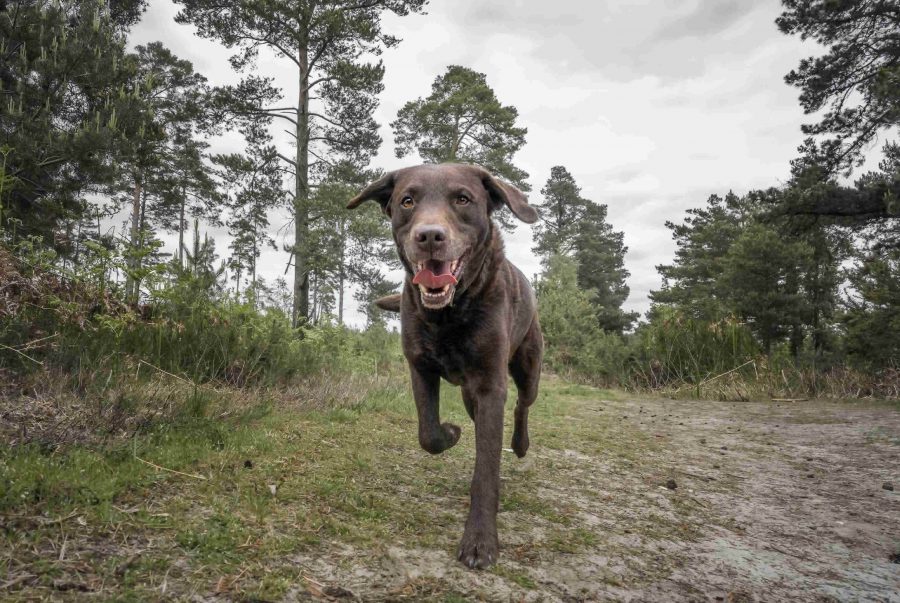
The data revealed something surprising: Max was actually getting more daily steps than before his weight gain. However, his movement patterns showed he was walking slower, taking longer routes to avoid hills, and his play sessions had become shorter and less energetic. This wasn’t a lazy dog problem—it was early-stage arthritis affecting his movement quality.
“The GPS data that Jennifer provided completely changed our treatment approach,” Dr. Chen explains. “Instead of pushing Max to exercise more, we focused on joint health, pain management, and modified exercise that improved his quality of movement.”
This is the power of GPS dog fitness tracker technology: transforming simple location data into insights about your pet’s health, behaviour and wellbeing. Your Kippy Dog isn’t just tracking where your pet goes—it’s creating a comprehensive picture of how they live, move and feel.
As a leader in pet safety, Kippy believes that understanding your dog’s activity patterns is essential to providing the best possible care. Let’s explore how GPS data becomes your window into your pet’s physical and behavioural health.

The science of GPS health monitoring: Beyond basic step counting
Understanding multi-dimensional activity analysis
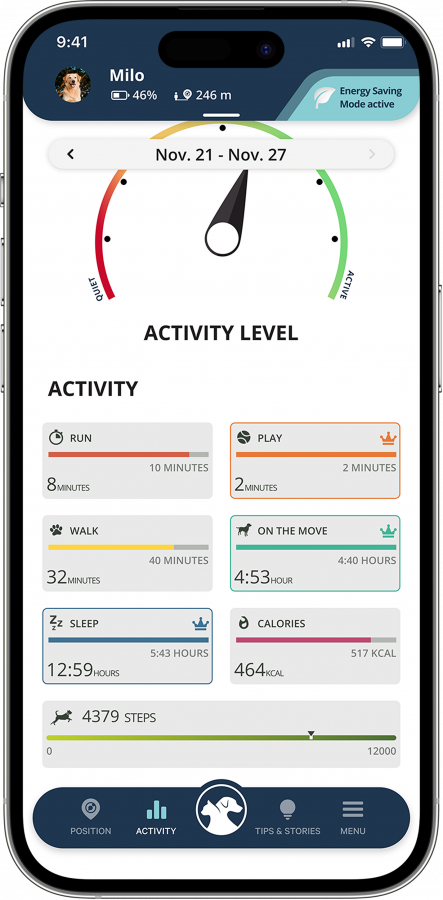
Traditional pet fitness trackers focus on simple metrics like steps and distance. Kippy Dog activity monitoring can analyse behavioural patterns that may reveal health insights:
- Pace consistency: Changes in walking speed that might indicate comfort or discomfort
- Route preferences: Behavioural changes that could show adaptation to physical limitations
- Activity duration: Endurance changes that might indicate cardiovascular or joint health
- Rest pattern analysis: Sleep quality and changes
Activity insight #1: Early health issue detection
The Power of Baseline Comparison
Cooper, a 5-year-old Golden Retriever, maintained consistent activity levels for two years. His Kippy Dog data showed changes over 4 weeks:
- Steps declined from his normal baseline
- Walking pace decreased
- Route modifications: Began avoiding the hillside park he previously loved
- Duration changes: Play sessions became shorter
Cooper’s owner, Mike, noticed no obvious changes. “He still wagged his tail, still wanted to go for walks. I thought he was just getting a little older.”
The data revelation: GPS data revealed declining activity and reduced walking pace—potentially early indicators of mobility issues that were detected before clinical symptoms became obvious.
The intervention: Early physical therapy, joint supplements, and modified exercise routines helped prevent Cooper’s condition from progressing.
Key Health Indicators in GPS Data
- Declining pace: May indicate joint pain, arthritis, or mobility issues
- Route avoidance: Steering clear of stairs, hills, or challenging terrain
- Shortened activities: Fatigue setting in earlier than usual
Activity insight #2: Optimising exercise for your dog’s unique needs
Personalised Fitness Planning Using GPS Data
Most exercise recommendations treat all dogs the same. GPS data reveals that optimal fitness is highly individual, depending on breed, age, health status, and environmental factors.
Breed-Specific Activity Considerations
High-energy working breeds (Border Collies, Australian Shepherds):
- Typically need substantial daily activity plus mental stimulation
- Monitor for signs of under-stimulation
- Look for consistent pace and varied terrain exploration
- Watch for repetitive pacing patterns indicating boredom or anxiety
Large breed dogs (Golden Retrievers, Labs):
- Benefit from moderate daily activity with joint-friendly surfaces
- Monitor impact activities and surface preferences
- Look for steady pace maintenance without rapid fatigue
- Watch for declining endurance or route modifications avoiding physical challenges
Small breed dogs (Cavalier King Charles Spaniels, French Bulldogs):
- Need moderate activity with climate considerations
- Monitor for overexertion in extreme temperatures
- Look for consistent energy levels throughout activities
- Watch for rapid pace decline or shortened activity tolerance
Senior dogs (all breeds 7+ years):
- Activity needs individualised based on health status and mobility
- Focus on movement quality over quantity
- Look for maintained interest in exploration and social activities
- Watch for gradual activity decline, route simplification or social withdrawal
Creating data-driven exercise plans
Step 1: Establish Individual Baselines
- Monitor for 2-4 weeks: Record normal activity patterns without changes
- Note environmental factors: Weather, seasonal, and routine influences
- Document preferences: Favourite routes, surfaces, and activity types
- Track energy patterns: Peak activity times and natural rest periods
Step 2: Analyse Activity Quality
- Pace consistency: Identify optimal walking speeds for your dog
- Duration patterns: Find activity lengths that work best
- Surface preferences: Note which terrains your dog navigates most comfortably
- Recovery needs: Understand rest requirements between activities
Step 3: Implement Targeted Improvements
- Gradual changes: Use GPS data to monitor activity modifications
- Quality focus: Emphasise movement quality improvements over quantity
- Variety integration: Introduce new routes and activities based on preferences
- Health monitoring: Watch for signs of overexertion or concerning patterns
Practical implementation: Making GPS data work for your dog
Initial Configuration for Health Tracking:
- Baseline establishment: 2-4 weeks of normal activity recording
- Health goal setting: Target activity levels based on breed, age, and health status
- Alert customisation: Notifications for concerning activity changes
- Veterinary integration: Sharing data with your pet’s healthcare team
Daily Monitoring Routine:
- Morning activity check: Review overnight patterns and daily readiness
- Activity assessment: Monitor energy levels and movement quality
- Evening analysis: Evaluate daily totals and pattern consistency
- Weekly trend review: Look for gradual changes requiring attention
Preparing Health Reports for Veterinary Visits:
- Activity trend summaries: Multi-week activity pattern analysis
- Behavioural change documentation: Specific examples of concerning patterns
- Treatment monitoring: Tracking changes during treatment or rehabilitation
Questions to Explore with Your Veterinarian:
- Activity level appropriateness: Is your dog getting suitable exercise for their health status?
- Pattern interpretation: What might specific movement changes indicate about health?
- Exercise modification: How should activity be adjusted based on health conditions?
- Monitoring priorities: Which GPS metrics are most important for your dog’s specific health needs?
The future of pet health monitoring
Emerging technologies
Enhanced pattern recognition: Future developments may include more sophisticated analysis of movement patterns to identify potential health changes.
Integration possibilities: GPS data might eventually be combined with other health monitoring technologies for more comprehensive insights.
Veterinary collaboration: Increased integration between activity data and veterinary care for better preventive health management.
Taking action: Your dog’s health journey starts with data
Week 1: Baseline Establishment
- Day 1-3: Configure Kippy Dog for comprehensive health monitoring
- Day 4-7: Record normal activity patterns without making changes
- Goal: Understand your dog’s current activity baseline and preferences
Week 2: Pattern Recognition
- Day 8-14: Analyse daily and weekly activity patterns
- Identify: Peak activity times, preferred routes, and natural rest periods
- Goal: Recognise your dog’s unique activity signature and preferences
Week 3: Optimisation Implementation
- Day 15-21: Make targeted improvements based on GPS insights
- Adjust: Exercise timing, route variety, or activity duration based on data
- Goal: Enhance your dog’s activity quality using data-driven decisions
Week 4: Health Integration
- Day 22-28: Share GPS data with your veterinarian for professional insights
- Evaluate: Changes in activity patterns and overall wellbeing
- Goal: Establish ongoing health monitoring routine using GPS data
Week 5+: Long-Term Health Management
- Ongoing: Regular review of activity trends and pattern changes
- Monthly: Comprehensive analysis of health indicators and environmental factors
- Quarterly: Veterinary consultation with GPS data for preventive care planning
Conclusion: Transforming GPS data into health insights
Your GPS tracker is more than a location device—it’s a potential health monitoring tool that can provide insights that casual observation might miss. The GPS device on your pet continuously collects data that may reveal early health changes, help optimise exercise routines and provide objective evidence of your pet’s wellbeing.
The transformation from simple tracking to health insight requires three elements:
- Quality data collection through reliable GPS technology
- Informed analysis understanding what activity patterns might reveal about health
- Proactive action using insights to potentially improve your pet’s care and wellbeing
GPS activity monitoring doesn’t replace veterinary care—it enhances it. By providing objective, continuous data about your dog’s movement patterns, behaviour changes, and activity trends, GPS tracking becomes a valuable tool for both preventive care and early detection of potential issues.
Your dog can’t tell you when they’re starting to feel joint pain, when their energy is declining, or when anxiety might be affecting their behaviour. However, their movement patterns may provide insights about these changes—if you know how to interpret the data and work with your veterinarian.
The future of pet health care is increasingly data-driven, personalised, and preventive. It starts with understanding that every step your dog takes might be telling you something important about their health, happiness, and wellbeing.
Ready to unlock the potential health insights in your dog’s daily activities?
Kippy: Your trusted partner in pet safety.